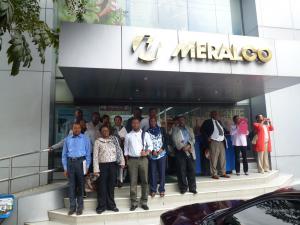
MARCH 2014 – MANILA & CEBU, THE PHILIPPINES – Funded by the United States Agency for International Development (USAID), energy executives from the Tanzania Electric Supply Company Ltd (TANESCO), Zanzibar Electricity Corporation (ZECO), Ministry of Energy and Mineral Resources (MEM) and Energy and Water Regulatory Authority (EWURA) recently participated in the Executive Exchange on Increasing Access to Electricity by Improving Billing, Metering and Collections in Manila and Cebu, the Philippines.
Everyone likes to cite the statistics for the number of coal plants being built each week/month/year in China. Yet, this is only one part of the story. For example, in January 2013, China’s State council approved a national energy consumption control target (4 billion tonnes of coal equivalent by 2015) which caps total energy growth just above 3 percent per year through 2015. And with respect to coal specifically, the 12th Five Year Plan for Energy Development sets an expected target for coal to account for 65 percent of total energy consumption.
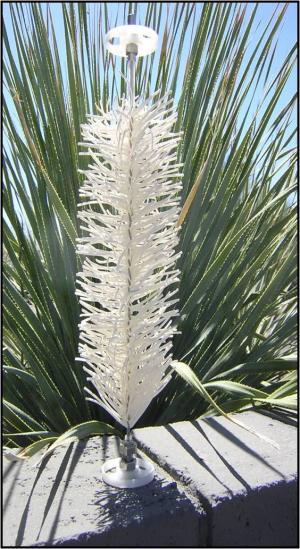
After a brief overview of technology options for scrubbing carbon dioxide directly from the atmosphere and a discussion of the technical and economic hurdles that need to be overcome, Dr. Lackner will consider the policy implications of air capture in the current climate change debate. Capture of carbon dioxide from ambient air renders emissions from any source reversible and it defines the cost of unauthorized emissions.
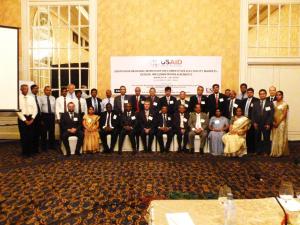
COLOMBO, SRI LANKA - The United States Energy Association, under the South Asia Regional Initiative for Energy Integration (SARI/EI), with funding from the United States Agency for International Development, organized a South Asia Regional Workshop on Competitive Electricity Markets that took place March 18 – 20, 2014 in Colombo, Sri Lanka.
This presentation will discuss tools to help management evaluate and understand an organization’s cybersecurity posture and develop a prioritized roadmap for improvement. Tools discussed include the Cybersecurity Capability Maturity Models (C2M2) developed specifically for the energy sector and the Cyber Resilience Review (CRR) being applied across critical infrastructure sectors.