December 12th, 2014

USEA Upcoming Events

December 10, 2014: USAID/USEA Ukraine Power System Support Project Meeting Kiev, Ukraine

January 2015: USAID/USEA Black Sea Regional Transmission System Planning Project Working Group Meeting Bucharest, Romania
 
February 2015: USAID/USEA Southeast Europe Distribution System Operator (DSO) Security of Supply Working Group Meeting 

Job Title: 
Deputy Program Director
Organization: 
United States Energy Association

Caity Smith serves as Senior Program Coordinator for the U.S. – East Africa Geothermal Partnership (EAGP), a public-private partnership between the U.S. Agency for International Development and the Geothermal Energy Association, implemented by the U.S. Energy Association.  Caity has worked in the geothermal industry since 2007 and has experience in procurement, travel and expense management, marketing, and international project and contract management.  In her role with EAGP, Caity coordinates with USAID, other international donors, East African stakeholders, and the U.S. geothermal industry to organize information exchange visits, private sector forums and workshops, and policy/technology cooperation exchanges, and other activities related to advancing geothermal energy development in East Africa and expanding business opportunities for U.S. geothermal companies.  Caity holds a MA in Education from Sonoma State University as well as a BA in Environmental Studies and Planning.

Job Title: 
Mechanical Engineer
Organization: 
Lawrence Berkeley National Laboratory

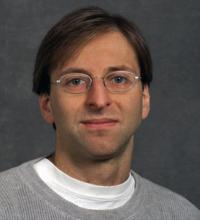
Barry Freifeld is a Mechanical Engineer at the Lawrence Berkeley National Laboratory, where he is the principal investigator for numerous projects relating to CO2 sequestration and arctic hydrology. He received his BA in Applied Mathematics (UC Berkeley), his MS in Mechanical Engineering (UC Santa Barbara), and PhD in Civil and Environmental Engineering (UC Berkeley, 2001). He is an expert in the development of well-based monitoring instrumentation and techniques. His recent innovations include the U-tube geochemical sampling methodology, as well as thermal perturbation fiber-optic monitoring techniques  for understanding subsurface processes. He has also received a U.S. patent for a portable whole-core x-ray computed tomography imaging system used at continental drill sites and on drilling vessels.

Profile Type: 
Speaker
Job Title: 
President & CEO
Organization: 
Paulsson, Inc. (PI)

*Ph.D. in Seismology and Rock Mechanics from UC Berkeley 1983

o Performed the industry first time lapse tomographic monitoring survey of a fractured rock mass 1978 – 1980

o Published more than 50 papers in borehole seismology

o Holds eight patents and two patent applications

*Worked for Chevron Oil Field Research Company for 13 year

o Did a tomographic survey to map oil saturation in Kern River Oil Field 1985

o Invented and designed the borehole seismic vibroseis tool

o Received the Chevron Chairman’s award for instrument inventions

 *Paulsson Geophysical & Paulsson, Inc.

o Started and operated two companies specializing in borehole seismology

o Invented and designed the industry’s first large borehole seismic array 1998

o Invented and designed a fiber optic seismic vector sensor

*SEG

o Organized the first SEG Development and Production Forum 1991

o SEG Development of Production Committee Chairman 1992 – 1994

o Co- Chairman of the first SPE/SEG joint pilot forum, 1996

o Chairman of the eighth SEG D&P and second SEG/SPE pilot Forum, 1998

 *SPE

o SPE Distinguished Lecturer 1992-1993


 Presentation Summary:

An effective production of geothermal energy is critically dependent on a precise understanding of the complexity of the geologic formations prior to the development of the geothermal reservoirs. A successful production also depends on an accurate monitoring program to understand the dynamic processes of the injection of fluids and of producing the geothermal resources. The complex production processes of the geothermal fields will only be understood and managed in detail if new robust high-resolution reservoir imaging and monitoring technologies are available to characterize the reservoirs in the early phases of the field development.

Seismic techniques are the dominant geophysical techniques for the characterization of subsurface structures and stratigraphy. The seismic techniques also dominate the monitoring and mapping of reservoir injection and production processes. Borehole seismology, of all the seismic techniques, despite its current shortcomings, has been shown to provide the highest resolution characterization and most precise monitoring results because it generates higher signal to noise ratio and higher frequency data than surface seismic techniques. The operational environments for borehole seismic instruments are however much more demanding than for surface seismic instruments making both the instruments and the installation much more expensive.

To address the critical site characterization and monitoring needs for geothermal reservoir characterization and monitoring, US Department of Energy (DOE) funded Paulsson, Inc. in 2010 – 2014 to develop a fiber optic based ultra-large bandwidth clamped borehole seismic vector array capable of deploying up to one thousand 3C sensor pods suitable for deployment into high temperature and high pressure boreholes.

Tests of the fiber optic seismic vector sensors have shown that the new borehole seismic sensor technology is capable of generating outstanding high vector fidelity data with extremely large bandwidth: 0.01 – 6,000 Hz. Field tests have shown that the system can record events at magnitudes much smaller than M-3.0 at frequencies up to 2,000 Hz. The sensors have also proved to be about 100 times more sensitive than the regular coil geophones that are used in borehole seismic systems today. The fiber optic seismic sensors have furthermore been qualified to operate at temperatures over 300°C (572°F). Using the fiber optic sensor technology we also demonstrate that we have been able to design and prototype a 3C sensor pod with a 1” OD. Despite the small size the new sensor still outperforms accelerometers and state of the art geophones.


Profile Type: 
Speaker
September 7th, 2014

With support from USAID/Haiti, the U.S. Energy Association (USEA) manages the Haiti Energy Policy and Utility Partnership Program (HEPP).  HEPP will expose Haitian energy policy makers and utility officials to the necessary policy, regulatory and technical frameworks needed to expand generation, encourage private investment and diversify Haiti’s power resources.  Through a series of exchange programs to U.S.

December 4th, 2014

Weekly collection of energy news articles for the region

Click on the links for access to original publications

Job Title: 
Principal
Organization: 
Geofirma Engineering Ltd

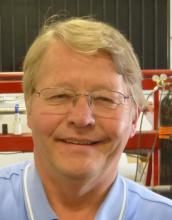
Dick Jackson obtained his PhD in 1979 at the University of Waterloo, where he is now an Adjunct Professor. During the 1980s he established Environment Canada’s Ground-Water Contamination Project at the National Water Research Institute in Burlington, Ontario. He then joined INTERA in Austin, Texas in 1989 to modify enhanced oil recovery methods for groundwater cleanup. He returned to Canada in 2006 as a Principal with Geofirma Engineering Ltd. of Ottawa, to become task leader for geochemistry and petrophysics for the Deep Geological Repository at the Bruce Nuclear site.

He was awarded the 2008 Geoenvironmental Award of the Canadian Geotechnical Society and the 2013 Farvolden Award by the Canadian chapter of the International Association of Hydrogeologists. He is currently undertaking research into energy-well integrity and associated groundwater contamination. He lives near Waterloo, Ontario.

Profile Type: 
Speaker
Job Title: 
Geophysical Consultant
Organization: 
RMHabiger Consultants LLC

Rob Habiger holds Bachelors, Masters, and Ph.D. degrees in physics. He worked for ConocoPhillips for over 28 years in various scientific and management capacities in the disciplines of petrophysicis and geophysics. While there, he held various positions in research & development and in international exploration, including Manager for Seismic Technology in the Houston corporate offices. He joined Spectraseis as Chief Technology Officer in February 2007 where he was responsible for all technical aspects of the company’s research and commercial offerings in passive seismic technology. These programs and products include microseismic monitoring associated with hydraulic fracturing, induced/triggered seismic monitoring, and hydrocarbon reservoir fluids monitoring from low frequency passive seismic. Rob was the Director of the Low Frequency Seismic Partnership, an industrial research consortium studying the application of low frequency passive seismic methods to hydrocarbon fluid mapping. Rob served on the DOE sponsored National Research Council committee which released the report Induced Seismicity Potential in Energy Technologies in June 2012. Rob is currently a consulting geophysicist in Littleton, Colorado.

Presentation Summary: Can ambient seismic waves provide information on subsurface fluid reservoirs?

Surface and borehole ambient, or passive, seismic data have been acquired for years, although the uses continue to evolve. While using passive data for locating and understanding earthquakes, studying the earth’s crust, and monitoring hydraulic fracture completions are well established, using ambient seismic data for evaluating subsurface fluid reservoirs is relatively new and controversial. Ambient wave data has advantages over conventional, active seismic data. It has the potential to provide direct fluid information (the primary goal in oil and gas exploitation), which can sometimes be done with active seismic data, but often is controlled by structure and matrix parameters. Ambient data can also be collected at a fraction of the cost of conventional, active source seismic data. This talk will briefly review the history of ambient wave data for obtaining fluid information in subsurface reservoirs and the challenges to developing this technology.


Profile Type: 
Speaker

Pages