
November 7th, 2014

Weekly collection of energy news articles for the region

Click on the links for access to original publications

Job Title: 
President & CEO
Organization: 
Capuano Engineering Company

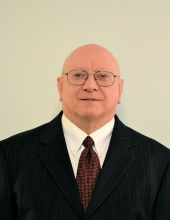
Mr. Capuano is a graduate from University of Southwestern Louisiana with a B.S. in Petroleum Engineering.  He has worked in the drilling industry since 1971. In 1974, Mr. Capuano moved to Santa Rosa, CA to open the geothermal office for Aminoil USA. Mr. Capuano has worked continuously in the geothermal industry since 1974, in most of the geothermal fields throughout the world. He has experience with vapor dominated fields, liquid dominated fields, geopressure geothermal reservoirs, and EGS geothermal systems.

Mr. Capuano built ThermaSource into a successful, well-recognized, full service provider for the drilling of wells in the geothermal industry.  Mr. Capuano is a member of the Geothermal Resources Council (GRC), Geysers Geothermal Association, Geothermal Energy Association (GEA), and International Geothermal Association (IGA). Mr. Capuano has served on Industry Advisory Panels for LBL, DOE, Los Alamos National Lab, and Sandia National Lab. He is also Member of the founding Committee of the Geysers Geothermal Association and served as it’s founding President from 1983-85. He is a Board of Directors member since founding of organization and member of the Executive Committee until 1991. He has been a Member of Industry Advisory Panels for LBL, DOE, Los Alamos National Lab, Sandia National Lab, as well as a Board member of the Geothermal Energy Association headquartered in Washington D.C. He has also presented papers and performed duties as instructor and organizer at numerous geothermal workshops and seminars. He also teaches the week long class on Geothermal Drilling at the University of Nevada in Reno, NV. This session is offered yearly as the National Geothermal Academy, a U.S. DOE sponsored workshop that gives college credit for the 8-week course.
Profile Type: 
Speaker
November 5th, 2014

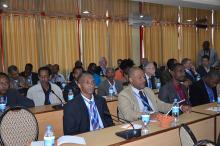
November 2014 – ARUSHA, TANZANIA – Funded by the United States Agency for International Development (USAID), the US-East Africa Geothermal Partnership (EAGP) sponsored two pre-conference workshops at the 5th African Rift Geothermal Conference (ARGeo C-5).  Instructors from the United States, Australia, Iceland, Kenya, Rwanda, and Germany taught two courses, “The Use of Optimized Exploration, Data Management, Conceptual Modeling, and Well Design and Planning to Improve Drilling Successes” and “Financing Geothermal Projects from Exploration through Construction”.  The cours

Job Title: 
Principal Advisor – Petroleum Engineering
Organization: 
Baker Hughes | Reservoir Development Services


Ronald (Ron) Sweatman is Principal Advisor – Petroleum Engineering, Reservoir Development Services, Baker Hughes Inc. and provides solutions for reservoir development challenges in projects for oil & gas exploration and production, enhanced oil recovery (EOR), gas (CO2 & CH4) storage, and geothermal energy. Engineer graduate from BJ Hughes’ internal Well Services Engineering School majoring in Stimulation, Cementing, and Sand Control. Also majored in Chemistry at LSU and Petroleum Engineering at USL, completed over 50 continuing education courses, and has 45 years of engineering and operations experience in well construction and production technologies. He has served on more than 20 industry committees including the CSA Z741 standard for CCS projects, 2010 API/IADC Joint Industry Task Force for the Macondo well control incident, authored over 100 technical publications, received 9 industry awards, and invented 44 patented technologies including those for:

Well cementing - cement additives and methods to place cement barriers in wells

Well integrity – pressure barrier testing/repair and remote detection of leaks

Reservoir flow monitoring/control for reservoir fluid containment & EOR sweep efficiency 

Hydraulic fracturing stimulation for shale and other tight formations

Downhole thermal modelling to predict initiation of kicks after drilling & flow after cementing

On-demand-at-the-bit changes in drilling fluid properties

Wellbore strengthening, lost circulation control, & trouble zone drilling diagnostics  

 Converting oil & gas reservoirs to produce geothermal energy


Ronald's presentation, “Well integrity in CCS/CCUS projects" will focus on best practices to design and construct new wells to resist corrosion and to find and seal leaks in old and new wells before they become big issues.


Profile Type: 
Speaker
Job Title: 
Distinguished Engineering Advisor
Organization: 
Apache Corporation 

George E. King is a Registered Professional Engineer with over 43 years oilfield experience since starting at Amoco Production Research in 1971. His technical background includes research on energized fracturing, workovers. chemicals, acidizing, well integrity, horizontal wells and unconventional  formations. He is a Distinguished Engineering Advisor with Apache Corporation.

Technical accomplishments include 70 technical papers, Distinguished Lecturer for the Society of Petroleum Engineers, Adjunct professor at University of Tulsa (at night), and ongoing work in well construction, completion, fracturing and production.  Presentations of teaching files and presentations are posted at www.GEKengineering.com

Awards include the Amoco Vice President’s Award for technology from Amoco in 1997, the 2004 SPE Production Operations Award and 2012 Engineer of the year for the Houston Region of Society of Professional Engineers. 

Education includes a BS, majoring in Chemistry from Oklahoma State (1972), a BS in Chemical Engineering from University of Tulsa (1976) and a MS in Petroleum Engineering from  University of Tulsa (1982).

 Presentation title & Overview

Well Integrity – Basics, Prevention, Monitoring, Red Flags & Repair Options

As humans develop and utilize their natural resources, enduring isolation integrity that results in separation and protection of resources, including but not limited to mineral and water resources, is the single most important objective in subsurface operations.

Knowledge of the subsurface and the activities that humans invoke and monitor, both in the short term and the long term, are the factors of interest. Enormous amounts of scientific study have shaped the development industries of building, mining, oil and gas operations, geothermal activities and ground water withdrawals. No industrial development is perfect and all can be improved with technology.

How we operate within the scope of our activities, what we leave behind and how we react to intended or unintended consequences of activities is the deciding factor in success or failure of our protective intentions.

This talk will examine modern well integrity approaches, problem areas, technology gaps and developing technology. It will also place well integrity and integrity failures in context with other subsurface problems.

 Outline:

•      

Why are we dealing with the subsurface?

•      

What is well integrity? How do we achieve it?

•      

Basic initial well design objectives and methods of abandonment.

•      

How permanent is it?     Failures by Era of technology available.

•      

What are the warning flags and how do we monitor the isolation?

•      

What can be done when isolation fails.

 •       Putting human subsurface operations in context. 


Profile Type: 
Speaker
November 21st, 2014

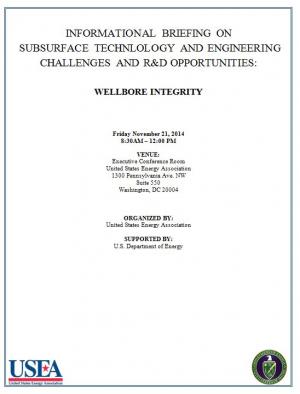
The U.S. Department of Energy is seeking to understand the broader technical challenges related to subsurface technology and engineering for energy applications such as oil and gas, carbon storage, geothermal, and waste disposal.  This briefing will aim to facilitate a dialogue with industry on what they perceive as the key challenges and opportunities regarding wellbore integrity.

Pages