November 7th, 2019

Active reservoir management (ARM) has the potential to improve the commercial viability of geologic CO2 storage, and has applications to the geologic disposal of fluids associated with energy production and a broad cross section of other industries. Treatment and handling of brine or “high total dissolved solids” waters associated with energy production can be challenging and not readily or economically accomplished using conventional water treatment techniques. These fluids are typically disposed of through geologic injection.

Job Title: 
Assistant Vice President for Strategic Partnerships
Organization: 
EERC

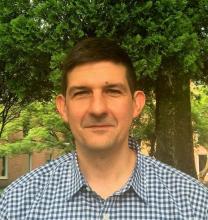
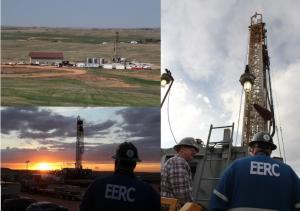
John Hamling is Assistant Vice President for Strategic Partnerships at the EERC, where he works to catalyze and implement pioneering solutions that facilitate the prudent development and use of low-carbon and fossil energy. Mr. Hamling serves as a development lead and advisor for screening, characterization, qualification, design, permitting, incentive program compliance, installation, and monitoring aspects multiple geologic CO2 storage projects ranging in scale from 10,000 to over 18,000,000 tonnes per year. Mr. Hamling also serves as an advisor and development lead for several EOR pilots in both conventional and unconventional fields.


Mr. Hamling has over 15 years of experience in oil and gas and CCS. He holds a B.S. degree in Mechanical Engineering and an M.S. degree in Petroleum Engineering from the University of North Dakota (UND). Mr. Hamling is an adjunct lecturer in the Department of Petroleum Engineering at UND and a board member for the Williston Basin Society of Petroleum Engineers since 2012.

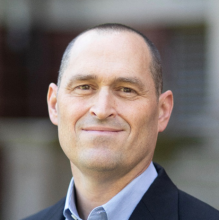
Job Title: 
Senior Associate
Organization: 
Rocky Mountain Institute

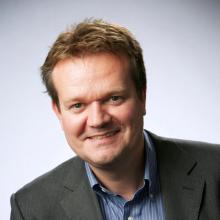
Patrick Molloy is a Senior Associate with the Rocky Mountain Institute's Industry and Heavy Transport Program. In this role, Patrick has worked on innovation and financing decarbonization efforts within the mining and shipping industries, with particular emphasis on on-site renewable energy development and hydrogen-based decarbonization solutions. Patrick previously worked with RMI's Business Renewables Center, which supported the corporate procurement of renewable energy. He is a graduate of University College Dublin and The Johns Hopkins University, School of Advanced International Studies.

Job Title: 
Advanced Energy Technology Research
Organization: 
Clean Air Task Force

Mike Fowler is Director, Advanced Energy Technology Research at CATF, where he is responsible for exploring new technologies and related commercial landscapes, facilitating awareness of new technology options with key stakeholders such as vendors, customers, finance, public officials, and advocates, and identifying catalytic commercial and policy actions that could be useful in moving key technologies forward. He has spent most of the last two decades evaluating costs and advancing the benefits of clean energy and environmental systems, including providing support for project investment evaluations, providing testimony in state and federal regulatory and permit proceedings, and working with developers to unlock hidden value in their products.

Mike began his career at Harvard in atmospheric physics research before moving into air quality consulting and regulatory agency roles including Best Available Control Technology review for the State of New Mexico. From 2007 to 2012 Mike was Director, Advanced Technology for CATF. Most recently he spent five years with Mitsubishi Heavy Industries working to advance carbon capture and battery energy storage projects. In addition to his work for CATF Mike is an advisor to the Energy Options Network.

Mike holds a Bachelor of Arts degree in Physics from Harvard University, a Master of Science degree in Aerospace Engineering from the University of Colorado at Boulder, and a Master of Engineering degree in Nuclear Engineering from Pennsylvania State University.

Job Title: 
Senior Advisor Advocacy & Communications
Organization: 
Global CCS Institute

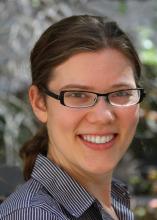
Lee is currently the Global CCS Institute's Senior Advisor for Advocacy and Communications based in the Institute's Washington, DC office. In her role, Lee works closely with diverse stakeholders in North America to advocate on behalf of and strengthen the understanding of CCS and its role in delivering vital emissions reductions vis-à-vis global climate goals.

Before joining the Institute in mid-2018, Lee was a Public Relations Project Manager at VEIC, a non-profit which addresses the economic and environmental costs of energy consumption through the adoption of energy efficiency and renewables. She began her career as a journalist reporting in Germany, Italy, Tanzania and Hong Kong before gathering experience in a variety of global energy issues such as natural gas markets, energy and climate diplomacy, and the German Energiewende.

Lee has a Master of Arts in International Affairs & Economics with majors in Energy, Resources & Environment and Political Economy from Johns Hopkins University’s School of Advanced International Studies (SAIS). Lee is also currently a Women Leaders in Energy Fellow at the Atlantic Council's Global Energy Center. She speaks German, French and Italian.

Job Title: 
Director - Office of Carbon Management Technologies
Organization: 
U.S. DOE - Office of Fossil Energy & Carbon Management

Mark Ackiewicz is the Director for the Office of Carbon Management Technologies at the Department of Energy's Office of Fossil Energy & Carbon Management (DOE-FECM).  He is responsible for planning, management, and administration of the division’s $200 million annual budget and its portfolio of R&D activities.  In this role, he leads a team of scientists and engineers that are collaborating and working with industry, national laboratories, and universities on developing advanced and transformational technologies to enhance energy security and reduce greenhouse gas (GHG) emissions.

Mark also serves as technical lead on several of the Department’s international R&D collaboration efforts, such as the Carbon Sequestration Leadership Forum (CSLF) and the Executive Committee for the International Energy Agency Greenhouse Gas (IEAGHG) R&D Programme. Under his leadership, he has led several multinational task forces and worked cooperatively with partners in standing up the International Carbon Capture Test Center Network.

Prior to his current position, Mr. Ackiewicz also served as DOE’s Carbon Capture Program Manager and Fuels Program Manager. Before joining DOE in 2007, he worked as a consultant, providing technical, analytical, and strategic planning services to the DOE and its technical research programs.  Early in his career, Mark worked in the private sector in various industrial research and engineering positions, where he was responsible for process development and new product scale-up to manufacturing. 

Mark has a B.S. in Chemical Engineering from Johns Hopkins University, and a Master’s in Engineering Management from George Washington University. He is married and has two children.

Job Title: 
VP Low Carbon Solutions
Organization: 
Equinor

Steinar Eikaas is heading up Low Carbon Solutions in Equinor, responsible for Carbon Capture and Storage (CCS) and Hydrogen Solutions. Mr Eikaas has worked for 25 years in Equinor (former Statoil) and has previously held senior positions within international business development. He holds a Master of Science from The Norwegian School of Business and Administration (NHH).”

Job Title: 
Deputy Assistant Secretary - Office of Carbon Management
Organization: 
U.S. DOE - Office of Fossil Energy & Carbon Management

Dr. Emily Grubert is the Deputy Assistant Secretary for the Office of Carbon Management in the Office of Fossil Energy and Carbon Management (FECM). In this role, she oversees FECM’s Carbon Management program, which focuses on minimizing the climate and environmental impacts of fossil energy through technology pathways including carbon capture, carbon dioxide (CO2) removal, CO2 conversion into products, reliable CO2 storage, and hydrogen production with carbon management.

Dr. Grubert is a civil engineer and environmental sociologist who studies and informs decision making regarding infrastructure systems, particularly related to justice-centering decarbonization of the U.S. energy system. Her expertise includes studying life cycle socioenvironmental impacts associated with future policy and infrastructure.

Dr. Grubert is an Assistant Professor of Civil and Environmental Engineering and, by courtesy, of Public Policy at the Georgia Institute of Technology. She holds a Ph.D. in Environment and Resources from Stanford, an M.S. in Environmental and Water Resources Engineering and an M.A. in Energy and Earth Resources from UT Austin and a B.S. in Mathematics and Atmosphere/Energy Engineering from Stanford.

Profile Type: 
Speaker
Credentials: 
Ph
Job Title: 
Chairman & Chief Executive Officer
Organization: 
NuScale Power, LLC

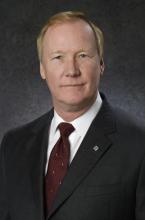
John L. Hopkins is chairman and CEO of NuScale Power, LLC, a leading U.S.-based advanced small modular reactor technology development company.


Hopkins is currently serving as chairman of the Executive Committee of the U.S. Chamber of Commerce, Washington, D.C.


Prior to joining NuScale in 2012, Hopkins was with Fluor Corporation since 1989, one of the world's largest publicly-traded engineering, procurement, fabrication, construction and maintenance companies. Hopkins held numerous leadership positions in both operations and business development globally.


From 2010 to 2013, Hopkins served as Fluor's group president for the corporate development and new ventures group, responsible for strategic planning, global sales and marketing.


Active in a variety of professional and business organizations, Hopkins is the chairman of the executive committee for the U.S. Chamber of Commerce, and was formerly the chairman of the board. Most recently, he was appointed to the Department of Energy's (DOE) Nuclear Energy Advisory Committee (NEAC). He is a member of the Nuclear Energy Institute Executive Committee and Task Force Member, Atlantic Council. He is a senior policy advisor of I Squared Capital, New York. He has also served as the senior executive member of both the Fluor Netherlands and Fluor United Kingdom board of directors; chairman of the board for Savannah River Nuclear Solutions, LLC; and as a director of the Business Council for International Understanding.


Hopkins holds a Bachelor of Business Administration degree in finance from the University of Texas, Austin. He also completed advanced management programs at the University of California, Irvine, Thunderbird University's international management program.

Twitter Username: 
NuScale_Power
Profile Type: 
Speaker

Pages