Job Title: 
Senior Environmental Engineer
Organization: 
National Energy Technology Laboratory
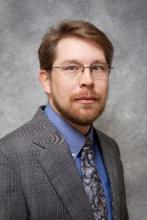
Mr. Skone is a Senior Environmental Engineer within the Department of Energy, National Energy Technology Laboratory’s Systems Engineering and Analysis Directorate.  He leads Life Cycle Analysis Research efforts within the Office of Fossil Energy on carbon utilization technologies, methane emissions from the natural gas value chain, alternative transportation fuels, advanced power generation systems, and energy water impacts.  He is the primary author on multiple natural gas and coal related life cycle analyses published by the Department of Energy.  He also leads research on energy resource availability, water scarcity, integration of biomass and fossil energy resources, and strategic energy concepts for new programs.  Mr. Skone is an elected member of the Society of Environmental Toxicology and Chemistry (SETAC) North American Life Cycle Analysis Interest Group, SETAC liaison to the American Center for Life Cycle Analysis, and member of the University of Michigan Global CO2 Initiative Advisory Board. Mr. Skone has 21 years of experience in the field of energy analysis and is a graduate of the Penn State University.
Profile Type: 
Speaker
Job Title: 
Associate Professor of Civil & Environmental Engineering
Organization: 
Stanford University

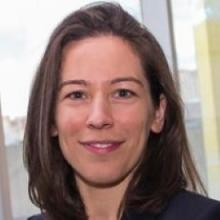
Professor Meagan Mauter holds bachelors degrees in Civil & Environmental Engineering and History from Rice University, a Masters of Environmental Engineering from Rice University, and a PhD in Chemical and Environmental Engineering from Yale University. She completed post-doctoral training in the Belfer Center for Science and International Affairs and the Mossavar Rahmani Center for Business and Government at the Harvard Kennedy School of Government, where she was an Energy Technology Innovation Policy Fellow.

At Stanford University, Professor Mauter is appointed as an Associate Professor of Civil & Environmental Engineering and as a Center Fellow, by courtesy, in the Woods Institute for the Environment. She directs the Water and Energy Efficiency for the Environment Lab (WE3Lab) with the mission of providing sustainable water supply in a carbon-constrained world through innovation in water treatment technology, optimization of water management practices, and redesign of water policies. Ongoing research efforts include: 1) developing automated, precise, robust, intensified, modular, and electrified (A-PRIME) water desalination technologies to support a circular water economy, 2) addressing the water constraints to deep decarbonization by quantifying the water requirements of energy systems and developing new technologies for high salinity brine treatment, 3) supporting design and enforcement of California agricultural water policy.

Mauter also serves as the research director for the National Alliance for Water Innovation, a $110-million DOE Energy-Water Desalination Hub to address water security issues in the United States. The Hub targets early-stage research and development of energy-efficient and cost-competitive technologies for desalinating non-traditional source waters.

Profile Type: 
Speaker
Credentials: 
PhD
December 16th, 2020

The momentum and vital need for carbon capture, utilization, and storage (CCUS) technologies has never been greater and two states that stand out with opportunities for CCUS are Colorado and Wyoming.

The US leads the world in facilities in operation or advanced development with 38 projects, including projects in both Colorado and Wyoming in power generation, gas processing, and cement production. New projects in biofuels and hydrogen production are also in development as these states are attracting more and more interest in CCUS from the business community.

December 15th, 2020

The momentum and vital need for carbon capture, utilization, and storage (CCUS) technologies has never been greater and two states that stand out with opportunities for CCUS are Colorado and Wyoming.

The US leads the world in facilities in operation or advanced development with 38 projects, including projects in both Colorado and Wyoming in power generation, gas processing, and cement production. New projects in biofuels and hydrogen production are also in development as these states are attracting more and more interest in CCUS from the business community.

December 11th, 2020

In this issue:

  • Letter from Sheila Hollis
  • Recap of 30th Energy Efficiency Forum
  • Sheila featured in November issue of Public Utilities Fortnightly
  • Recap of USEA Virtual Press Briefing on Financed Emissions
  • Women In Energy: Carol Dodson
December 8th, 2020
Regional energy integration across Eastern Europe and Eurasia is reaching a level of maturity that promises economic and environmental benefits, but only if we sustain our US commitment and investment there.
December 16th, 2020

The United States Energy Association (USEA) held a virtual Workshop on the Potential for Small-Scale Liquefied Natural Gas Deployment in Central and Eastern Europe on Wednesday, December 16. This workshop featured the release of a comprehensive regional study on key enablers and market potential for small-scale LNG in the region developed with funding from the U.S. Department of Energy’s Office of Fossil Energy.

Pages