Job Title: 
Director
Organization: 
National Renewable Energy Laboratory

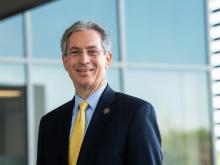
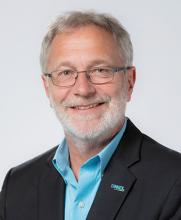
Martin Keller has served as director of NREL and president of the Alliance for Sustainable Energy—the company that operates NREL for the U.S. Department of Energy—since 2015.

Under his leadership, the laboratory's active partnerships with industry, universities, foundations, and governments now number more than 1,100—compared to 696 in 2015—generating more than $1 billion in research and development. NREL once again set a record for new partnerships in Fiscal Year 2023, with $143 million; 30 agreements were for $1 million or more. The laboratory's business volume has grown from $382.7 million in 2017 to $783.5 million in 2022.

To keep up with this growth, the number of regular full-time employees at NREL has increased by 82% over Keller's tenure, with the number of staff members more than doubling to nearly 3,700. Keller is a visionary leader who is committed to people, teams, and partnerships. He innovatively and pragmatically applies private sector best practices at NREL to achieve game-changing scientific outcomes.

Working collaboratively with his leadership team, Keller has developed a strategy for NREL focused on three key initiatives: integrated energy pathways, circular economy, and electrons to molecules. This strategy drives advanced scientific research, programs, projects, and partnerships at NREL.

From 2006 to 2015, Keller led energy, biological, and environmental research programs at Oak Ridge National Laboratory. His efforts culminated in his being promoted to serve as the associate laboratory director for the Energy and Environmental Sciences directorate during his last 6 years there.

Earlier in his career, Keller's dedicated work in a variety of research management positions at Diversa Corp. enhanced and developed the microbiology expertise of this biotech company.

He is a fellow of the American Association for the Advancement of Science and recently retired as chair of its Industrial Science and Technology section. In addition, Keller is chair of the Scientific Advisory Council for Forschungszentrum Jülich, a national research institution in Germany, and serves on numerous scientific advisory boards. In 2022, he was named a Most Admired CEO by the Denver Business Journal, and in 2024, he was named Laboratory Director of the Year by the Federal Laboratory Consortium for Technology Transfer.

Keller received his doctorate in microbiology from the University of Regensburg, Germany.

Job Title: 
Associate Laboratory Director
Organization: 
Argonne National Laboratory

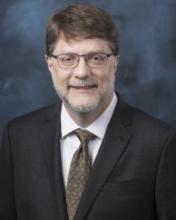
Claus Daniel is Associate Laboratory Director for Advanced Energy Technologies (AET). He leads an organization of scientists, engineers, and analysts working to develop globally needed solutions to deeply decarbonize the economy.

AET solves the most pressing energy, mobility, materials, and manufacturing challenges by using the laboratory’s world-class scientific and engineering expertise and facilities. The AET team collaborates with internal and external partners on cutting-edge research, development, demonstration, and deployment of clean energy technologies.

Dr. Daniel came to Argonne from the Carrier Corporation, where, as the Senior Director for Engineering Partnerships and Sustainability, he led academic, start-up, and government partnerships and the company’s strategy for sustainability focusing on the decarbonization of its product portfolio.

He has more than 20 years of experience in developing and advancing technologies in materials, manufacturing, and sustainability. He spent 16 years at Oak Ridge National Laboratory (ORNL), where he held numerous leadership roles including leading the lab’s automotive and mobility research and applied energy programs. He has also held a professorship at the University of Tennessee (UT), Knoxville and continues to be an appointed friend of the UT Bredesen Center. He was the founding Director of the U.S. Department of Energy Battery Manufacturing Research and Development Facility at ORNL.

Dr. Daniel holds a doctorate and a master’s degree in materials science from the Saarland University and a master’s degree in materials science and engineering from the École Européenne d’ingénieurs en Génie des Matériaux. He was awarded a number of prizes including the Gilbreth lectureship award from the National Academy of Engineering, the Battelle Distinguished Inventor Award from ORNL, the Carl-Eduard-Schulte-Prize from the Association of German Engineers, the Eugene P. Wigner Fellowship Award from ORNL, the Werner Köster Prize from the German Materials Society, the Martin Koester Prize from the Saarland University, and others. He is a Kavli alumnus with the National Academy of Science. In 2015, he was part of the U.S. delegation to the Council of Academies of Engineering and Technological Societies Convocation in India.

Dr. Daniel is the editor of the second edition of Wiley-VCH’s ​“Handbook of Battery Materials”, has published over 100 peer-reviewed international journal publications, holds over two dozen patents, and is a member in the Deutsche Gesellschaft für Materialkunde, Materials Research Society, Society of Automotive Engineers, and the American Association for the Advancement of Science.

Job Title: 
Director
Organization: 
Pacific Northwest National Laboratory

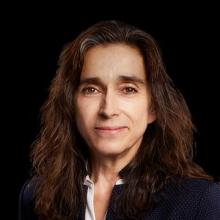
Dr. Steven Ashby is Director of the Department of Energy’s Pacific Northwest National Laboratory, where he sets PNNL’s strategic direction and oversees its $1.5 billion R&D budget. Under his leadership, PNNL’s nearly 6,100 talented staff members draw on signature capabilities in chemistry, Earth sciences, biology, and data science to advance scientific discovery, enable energy sustainability, and enhance national security.

Dr. Ashby previously served as PNNL's Deputy Director for Science and Technology, where he led institutional strategic planning, stewarded the Laboratory’s discretionary research portfolio, and oversaw technology commercialization, government relations, and research integrity.

Prior to joining PNNL in 2008, Dr. Ashby spent nearly 21 years at Lawrence Livermore National Laboratory (LLNL), where he oversaw the Computing Applications and Research Department and ultimately served as Deputy Principal Associate Director for Science and Technology. Dr. Ashby was the founding director of LLNL's Center for Applied Scientific Computing, which was established in 1996 and has since matured into one of the world's premier scientific computing research organizations.

As a widely recognized leader in computational science, Dr. Ashby has worked to advance the discipline throughout his career. His research focused on computational mathematics and scalable numerical algorithms; he is considered an expert in polynomial iterative methods and adaptive preconditioning techniques for large sparse linear systems. He remains active in the computational science community.

Dr. Ashby is a Fellow of the Society for Industrial and Applied Mathematics and the American Association for the Advancement of Science; member of the Washington State Academy of Sciences; Commissioner for the U.S. Council on Competitiveness; and serves on advisory committees for local and state organizations, including the Washington Roundtable.

He earned his M.S. and Ph.D. in Computer Science from the University of Illinois at Urbana-Champaign.

Job Title: 
Director
Organization: 
Oak Ridge National Laboratory

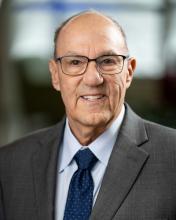
Dr. Stephen K. Streiffer became the director of Oak Ridge National Laboratory (ORNL) on October 16, 2023. As the twelfth director in ORNL’s history, Streiffer leads more than 6,500 staff in delivering on critical national missions by leveraging the laboratory’s world-leading facilities, tools, and signature strengths in neutron science, high-performance computing, advanced materials, biology and environmental science, energy technologies, nuclear science and engineering, isotopes, and national security research.

Streiffer came to ORNL from SLAC National Accelerator Laboratory, where he served as interim director. He joined SLAC in June 2022 as Stanford University’s vice president responsible for oversight of the lab. He previously spent 24 years in research and leadership positions at Argonne National Laboratory, concluding his tenure as the lab’s deputy director for science and technology.

His time at Argonne included leading the Photon Sciences Directorate and serving as director of the Advanced Photon Source (APS), a U.S. Department of Energy (DOE) Office of Science user facility that generates ultra-bright, high-energy X-ray beams for researchers from government, academia, and the private sector. While overseeing APS, Streiffer helped to lead the APS Upgrade, an $815-million project to improve photon performance by two to three orders of magnitude.

During the COVID-19 pandemic, from March 2020 through May 2022, Streiffer served as co-director of DOE’s National Virtual Biotechnology Laboratory (NVBL), a consortium that leveraged the national labs to address challenges related to testing, treatment, epidemiological modeling, and supply chain bottlenecks encountered during the height of the pandemic. Earlier in his tenure at Argonne, he helped to create and lead Argonne’s Physical Sciences and Engineering Directorate—which includes its Materials Science, Chemical Sciences and Engineering, Nanoscience and Technology, High Energy Physics, and Physics divisions. Streiffer also served as deputy associate laboratory director for its predecessor Energy Sciences and Engineering Directorate. From 2000–2009, he served a leadership role in development of Argonne’s Center for Nanoscale Materials, another Office of Science user facility.

Streiffer’s scientific expertise is in nanostructured complex oxides and the structural characterization of materials using transmission electron microscopy and X-ray scattering techniques. He has authored or co-authored more than 180 scientific publications and holds one patent. Streiffer earned his doctoral degree in materials science and engineering from Stanford University and his bachelor’s degree in materials science from Rice University. He is a fellow of the American Physical Society and a member of the Materials Research Society and Institute of Electrical and Electronics Engineers.

Job Title: 
Director
Organization: 
Lawrence Livermore National Laboratory
Kimberly S. Budil sets the strategic vision for Lawrence Livermore National Laboratory and exercises broad delegated powers to ensure successful execution of programs and operations to enhance national security through application of cutting edge science and technology and to maintain an outstanding and diverse workforce. She leads the development and implementation of the Laboratory’s scientific vision, goals and objectives and serves as the Laboratory’s highest-level liaison with the Department of Energy, National Nuclear Security Administration, the LLNS Board of Governors, the University of California and other government, public and private organizations.
 
Budil leads a workforce of more than 8,700 employees and manages an annual operating budget of approximately $3 billion. Along with the directors of Los Alamos and Sandia national laboratories, she shares the responsibility of providing the United States government with an annual institutional assessment of the safety, security, and effectiveness of the U.S. nuclear weapons stockpile and enterprise. She is the 13th director of the Laboratory and serves as president of Lawrence Livermore National Security, LLC.
 
Budil has held roles of increasing management responsibility at the Laboratory, most recently serving as principal associate director for Strategic Deterrence. Budil served as a detailee twice in Washington, D.C and was Vice President for National Labs at the University of California Office of the President. She currently serves on several boards and participates in numerous professional and community outreach activities.
 
Budil holds a Ph.D. in engineering and applied science from the University of California, Davis, where she was a Hertz Fellow, and a B.S. in physics from the University of Illinois at Chicago.
May 8th, 2024
In this episode of the USEA Power Sector Podcast geothermal series, Dr. Joseph Moore, Managing Principal Investigator for the University of Utah and DOE Utah Forge demonstration project, answered questions by journalist Herman K. Trabish about what the research project has discovered about the enormous potential of Enhanced Geothermal Systems to make geothermal energy a reliable, clean, and widely accessible source of power generation.
Job Title: 
Research Professor
Organization: 
University of Utah

Dr. Joseph Moore received his Ph.D degree from the Pennsylvania State University in 1975 and after graduation worked for the Anaconda Company as a uranium exploration geologist. He holds appointments at the University of Utah as a Research Professor in the Department of Civil and Environmental Engineering and as an Adjunct Professor in the Department of Geology and Geophysics. He has worked on geothermal projects since the mid 1970s. His expertise is in the geology, hydrothermal alteration, fluid inclusions and geochemistry of geothermal systems, and in the development of conceptual models based on geoscientific data. He has published numerous peerreviewed articles on his investigations and in 2009 received the Geothermal Research Council’s (GRC) Pioneer Award for his scientific contributions. Dr. Moore serves as Associate Editor for the Americas of the international journal Geothermics and is a member of the Board of Directors of the Geothermal Resources Council and the Technical Board of the Geothermal Energy Association.

Geothermal Research

Dr. Moore has served as the Principal Investigator on numerous Department of Energy (DOE) funded grants and is currently responsible for DOE’s Raft River, Idaho Enhanced Geothermal System project. Dr. Moore has conducted studies on many of the world’s major geothermal fields under DOE and private sponsorship (e.g., Caithness, Chevron, CalEnergy, Calpine, GeoGlobal, Magma Energy, Ram, Terra-Gen, Raser Technologies, and Unocal among others) and has served as a consultant to government and private organizations including the U.N., US AID, and the State of Utah.

Job Title: 
CEO and Founder
Organization: 
Catalisto

Claudia is the CEO and founder of Catalisto, a provider of cybersecurity sourcing, testing and capacity development services to critical infrastructure stakeholders globally. Claudia has worked in emerging technology commercialization and innovation for over 20 years, and has facilitated more than $10 billion of alliances, partnerships, acquisitions, investments and exits for public companies and new ventures around the globe.

Since starting her first company in compliance management while at University, Claudia’s career has spanned 5 continents, working on a broad range of safety and security initiatives, ranging from patrol boats in Vietnam, to remote location logistics, to NATO and other defense programs as Head of Commercial for the Weapons Systems division of BAE Systems. She has also been a commercial executive with numerous multinational companies, including with Infosys Technologies, Tabcorp Holdings and Fosters Group.

Prior to founding Catalisto, Claudia was a general partner and co-founder of AlphaPrime Ventures, an early stage venture firm focusing on safety and security innovations, and a general partner at Pereg Ventures investing in early-stage analytics technologies.

Profile Type: 
Speaker
Job Title: 
Commissioner
Organization: 
Alaska Department of Natural Resources

Mr. Boyle moved to Alaska in 2010 after graduating law school to serve a judicial clerkship in Fairbanks. Following the conclusion of the clerkship, he moved to Utqiagvik to work as an Assistant Borough Attorney and later Chief Advisor to the Mayor and Director of the North Slope Borough’s Government and External Affairs department. In 2016 he moved over to BP as their Director of Government Affairs before joining Oil Search (now Santos) as Government Affairs Manager.

He earned a Juris Doctorate from J. Ruben Clark Law School at Brigham Young University and a Bachelor of Science in Management and Finance at Brigham Young University.

Mr. Boyle and his wife Rosie live in Anchorage with their two children. His first day as commissioner was January 6, 2023.

Profile Type: 
Speaker
Job Title: 
Environmental Engineer - Underground Injection Control (UIC)
Organization: 
EPA - Region 10

James is an Environmental Engineer in the Underground Injection Control (UIC) Program at EPA Region 10. His duties include geological/well construction assessment, well integrity inspections, and permit writing. Prior to joining the EPA in 2022, he worked as an Engineer and Project Manager at environmental and geotechnical consulting firms in Chicago, New York City, and Anchorage.

Profile Type: 
Speaker

Pages