May 23rd, 2024
In this episode of the USEA Power Sector Podcast series on battery storage, Fluence SVP and President, Americas John Zahurancik, answered questions by journalist Herman K. Trabish about trends in the utility-scale battery storage industry, including emerging technologies that turn batteries into transmission assets, about what IRA tax credits mean for the industry, and about siting and permitting challenges and potential solutions for utility-scale storage.
Job Title: 
Chair and Professor of Chemical Engineering
Organization: 
Columbia University
Scott Banta Ph.D. is Chair and Professor of Chemical Engineering.  He received his B.S.E. degree from the University of Maryland, Baltimore County, and his M.S. and Ph.D. degrees from Rutgers University.  He did a postdoctoral fellowship at the Shriners and Massachusetts General Hospitals and Harvard Medical School.  He began his faculty career in the Department of Chemical Engineering at Columbia in 2004 and his research has focused on the engineering of proteins and peptides for various applications in areas including biocatalysis, bioelectrocatalysis, biomaterials, gene and drug delivery, biosensing, and bioenergy. His group is also developing new synthetic biology platforms for energy harvesting and conversion.
Profile Type: 
Speaker
Job Title: 
Executive Director & Co-Founder
Organization: 
Homeworld Collective

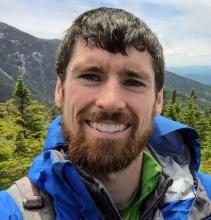
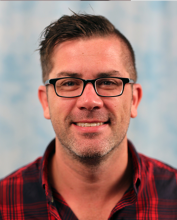
My mission is to see synthetic biology reach its industrial potential of creating atomically precise, infinitely scalable tools that define the next era of physical technology.

I am the founding co-Director of Homeworld Collective with my dear friend Paul Reginato. Homeworld exists to develop the field of climate biotech into a hyperproductive community.

I post essays and explore ideas in my personal blog Punk Rock Bio.

I tell my story as an arc of building skills that continually exposed me to new and exciting opportunities. Engineering took me to computer science, computer science took me to neuroscience, neuroscience took me to synthetic biology, synthetic biology took me to working on climate. Along the way I’ve learned to think like a designer, an entrepreneur, an investor, a scientist and an engineer.

I completed my (second attempt at a) PhD in September 2021 under Professor Ed Boyden at MIT. In addition to Ed, George Church and Sebastian Seung were in my PhD committee. My PhD thesis was to develop hybrid experimental and computational tools to create richer datasets of the brain. We published our spatial sequencing technology in Science in January 2021 that can resolve individual RNA molecules inside the original tissue.

Before enrolling at MIT, I was a Research Scientist in the Neuroscience Group at the Simons Center for Data Analysis (SCDA, but now renamed to the Flatiron Institute) in New York City. This was a subgroup of the Simons Foundation, a nonprofit founded by the philanthropic mathematician billionaire Jim Simons, founder of Renaissance Technologies (the first and best quant hedge fund).  SCDA's mission then is to build computational tools+collaborations for neuroscience and genomics. Here I had the opportunity to work directly with Sebastian Seung, a leader in computational neuroscience. This is where I started my work on building richer datasets in biology, and the SWITCH paper was published in Cell in November 2015.

Before returning to science in 2014, I was the CTO and co-founder of Mobile Data Labs, a start-up focused on building the best next-generation apps for business. The company's first entry to market is MileIQ, a mobile service that automatically tracks and classifies every mile that the user drives. Since launching in 2013, MileIQ has been the top grossing app in the Apple App Store and is now a vibrant team backed by Silicon Valley's best investors. In November 2015, Mobile Data Labs was purchased by Microsoft and continues to thrive.

Prior to Mobile Data Labs, I was an Entrepreneur-In-Residence at IDEO, the global design firm which brought forth the Apple computer mouse and the first laptop. While at IDEO, I co-lead the team produced an award-winning app in a joint venture with Sesame Street. I was selected as an EIR by IDEO while  enrolled at Stanford in a PhD program focusing on AI and Computer Vision - I left the program early, earning an MS in Electrical Engineering.

I was also an Entrepreneur-In-Residence at StartX, the Stanford student startup accelerator, and a proud engineering alumni of Harvey Mudd College (BS) and Stanford University (MS). 

In addition to pursuing mastery in climate biotech, I am a proud parent, an improving Brazilian Jiu-Jitsu blue belt, a decent surfer, climber and backcountry snowboarder, and a willing off-the-couch marathoner.

Profile Type: 
Speaker
Job Title: 
Program Manager - Biological Technologies Office
Organization: 
DARPA

Dr. Tiffany Prest joined DARPA in August 2022 as a program manager in the Biological Technologies Office (BTO). She specializes in infectious diseases, microbial ecology, computational modeling, cell and molecular biology, evolutionary biology, virology, and bacteriology. Her research interests include leveraging machine learning, microfluidics, and physics writ-large for microbial systems.

Prior to joining DARPA as a program manager, Prest served as a scientific, engineering and technical advisor (SETA) in DARPA BTO in her role as a lead scientist at Booz Allen Hamilton. There she provided technical support for multiple programs, including Friend or Foe, Arcadia, and Biological Control, among others. Before DARPA, Prest served as a scientist at Novozymes North America where she worked in microbial discovery.

Prest received a Bachelor of Science degree from Michigan State University and a doctorate from Duke University in microbiology and molecular genetics. She completed post-doctoral fellowships at both Duke University and the University of Colorado Boulder. Prest has also published several peer-reviewed articles.

Profile Type: 
Speaker
Job Title: 
Distinguished Staff Scientist
Organization: 
Idaho National Laboratory
Dr. Fox is a senior chemical research scientist actively involved in proposing, capturing, performing, and directing innovative scientific research in the areas of analytical chemistry, process chemistry, electrochemistry, supercritical fluid sciences, nanomaterials synthesis and characterization, metal –complexation reactions, lanthanide and actinide separations, renewable and biofuel synthesis, geochemistry, environmental radiochemistry, LIBS atomic spectroscopy, laser spectroscopy, and molecular spectroscopy. Dr. Fox is the technical lead and Principal Investigator of a number of successful internally and externally funded research programs for the U. S. Department of Energy, the U. S. Department of Defense, the U. S. Department of Homeland Security, and other U. S. Government and private industrial entities. Dr. Fox is Sr. Capture Manager for INLs Advanced Design and Manufacturing Initiative and has 25+ years of experience successfully capturing and conducting federal and private research. Dr. Fox is the Group Leader of B634 Chemical Systems, and team leader of the INL Supercritical Fluids Group, and has actively mentored more than 50 interns, graduate students, post-docs, early-career staff, and new hires over a 30-year INL career. Dr. Fox oversees four research laboratory spaces in IF-688 EIL and has built considerable research capabilities and a research team. Dr. Fox has performed research at IRC, MFC, TRA, CFA, CAES, Sandia National Laboratory, Lawrence Livermore National Laboratory, Lawrence-Berkley National Laboratory, Oak Ridge National Laboratory, Dugway Proving Ground, and Edgewood Chemical Biological Facility. Duties have traditionally included assisting management in development, implementation, and execution of programs designed to promote
Profile Type: 
Speaker
Job Title: 
Physical Geologist - Geology, Energy & Minerals
Organization: 
United States Geological Survey

In my role at the U.S. Geological Survey, I study the supply of materials important to society through materials flow analysis and mineral resource assessment. Materials flow analysis provides a quantitative framework for understanding how mineral resources are transformed into mineral commodities and enter industrial supply chains through processes like primary production, trade, manufacturing, end use, and recycling. Mineral resource assessment involves characterizing mineral deposits and integrating geological, geochemical, and geophysical datasets to better understand how and where minerals resources are concentrated in the Earth.

As a geologist, I am primarily interested in the physical and chemical evolution of the Earth’s crust. My research on ancient and modern orogens focuses on the many processes that create and modify continental crust including deformation, metamorphism, partial melting, and magmatism. Interpreting the spatial and temporal patterns of these petrogenetic processes requires a combination of field- and laboratory-based techniques including detailed structural mapping, microstructural analysis, trace element geochemistry, and accessory phase geochronology. To date, my projects have ranged from characterizing strain in the Grenville basement complex of the Virginia Blue Ridge, constraining the timescales of partial melting in the Himalayan mid-crust through U-Th-Pb dating of syn-tectonic leucogranites, evaluating rare earth phosphate mineralization mechanisms in Proterozoic gneisses of eastern California, and assessing the timing and tempo of large igneous provinces associated with catastrophic changes in Earth history.

Profile Type: 
Speaker
Job Title: 
Senior Systems Scientist
Organization: 
Carnegie Mellon University
Matthew Travers’ research focuses on developing the intelligence necessary to enable complex platforms to autonomously interact with and perform meaningful work in complex environments. The task areas on which he is currently focusing include biologically inspired dynamic locomotion and learning, compliant manipulation for agriculture and food preparation, managing uncertainty in human-robot interaction, and field-ready search and rescue robotics. The central ideas that underlie the analytical aspects of Travers’ work are drawn from classical control theory, Bayesian inference, practical optimal control, and modern reinforcement learning.
Profile Type: 
Speaker
Job Title: 
Staff Scientist - Earth and Environmental Sciences Division
Organization: 
Los Alamos National Laboratory
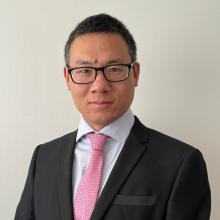
Dr. Wenfeng Li is a staff scientist at the Earth and Environmental Sciences Division, Los Alamos National Laboratory (LANL). He is also an adjunct professor at the Department of Mineral Engineering, New Mexico Tech. He received a Ph.D. in Mining Engineering from China University of Mining and Technology and a second in Petroleum Engineering from the University of Houston. His research interest includes geomechanics, fluid flow in porous media, and coupled Thermo-Hydro-Mechanical-Chemical (THMC) processes with applications in underground mining optimization, petroleum extraction, geothermal energy utilization, hydrogen geological storage, carbon sequestration and mineralization. He is leading a project at LANL on hydrogen generation optimization from mineralogical processes of iron-rich ultramafic rocks.
Profile Type: 
Speaker
Job Title: 
Technology Manager - Critical Minerals and Materials
Organization: 
National Energy Technology Laboratory

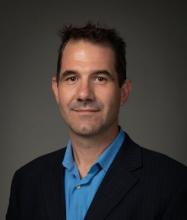
Dr. Scott Montross is a Technology Manager for the Critical Minerals and Materials program at the National Energy Technology Laboratory (NETL). This program is aimed at rebuilding U.S. leadership in extraction and processing of critical minerals from unconventional resources and secondary byproduct sources to support an economical, environmentally benign, and geopolitically sustainable U.S. domestic supply chain.

Prior to becoming a Technology Manager, Scott was a research geologist and geochemist in academia, industry, and government laboratories. In 2015 he joined NETL and began working on research projects to enhance wellbore cement integrity and search for of critical minerals available in coal, sedimentary rock, coal combustion byproducts, and coal mine waste. He has more than 20 years of experience investigating mineral, rock, and fluid interactions using advanced characterization techniques and testing of geologic materials to develop methods and technologies suited to recover targeted resources.

He has also led and participated in several exploration drilling projects across the U.S., Canada, Antarctica, and Greenland for the deployment of borehole geophysical and geochemical tools to produce high resolution geologic, hydrogeologic, and geochemical data to evaluate the subsurface.

Scott received his doctorate and master’s degrees from Montana State University’s Department of Earth Sciences and bachelor’s degree in molecular biology and geology from the Metropolitan State University of Denver.

Profile Type: 
Speaker
Job Title: 
Program Manager - Information Innovation Office
Organization: 
DARPA

Dr. Erica Briscoe joined DARPA as a program manager in September 2022 to develop, execute, and transition programs in computational social science, socio-technical systems, and science and technology analysis.

Briscoe joins DARPA from the University of Maryland’s Department of Defense University-Affiliated Research Center (UARC), the Applied Research Lab for Intelligence and Security (ARLIS), where she was the director of research. Previously, she was the senior vice president for strategy at an artificial intelligence (AI) security startup. Prior to that role, she was acting chief technology officer at the Georgia Institute of Technology’s UARC, Georgia Tech Research Institute, where she spent 12 years overseeing a large research portfolio. While there, she also executed her own research in computational social science, technology emergence and prediction, multi-modal reasoning, anticipatory intelligence, insider threat detection, terrorism/radicalization, and trusted AI.

Briscoe holds a doctorate and Master of Science in cognitive psychology from Rutgers University, a Master of Science in information systems from Drexel University, and a Bachelor of Science in industrial and systems engineering from Georgia Tech.

Profile Type: 
Speaker

Pages