


March 30th, 2018

The Women in Energy series is a joint project between USEA and USAID that was developed out of USEA’s Engendering Utilities Partnership, a program funded by USAID to improve gender policies and gender outcomes at their respective organizations.


https://www.usea.org/sites/default/files/DSO%20Logo%20with%20Usaid-Usea_0.jpg

Job Title: 
Partner
Organization: 
Reed Smith LLP

Colette is a member of Reed Smith’s Energy and Natural Resources Group resident in the Washington, D.C. office. Colette is a highly regarded policy maker in domestic and international energy sectors. Colette recently served as Commissioner at the Federal Energy Regulatory Commission (FERC). She was nominated by President Barack Obama in August 2014, and unanimously confirmed by the U.S. Senate in December 2014 for a term that expired in June 2017. At FERC, Honorable focused on reliability oversight of the bulk power system, cyber and physical security, oversight of wholesale markets, transmission planning and cost allocation in regional transmission organizations, gas-electric coordination, renewables integration, energy storage integration and valuation, enforcement, ratemaking, infrastructure development, and enforcement matters. Colette joined the FERC from the Arkansas Public Service Commission (PSC), where she served since October 2007 and led as Chairman from January 2011-January 2015.

As Chairman of the PSC, Colette was charged with ensuring safe, reliable and affordable retail electric service. During her tenure, Arkansas led the South and Southeast in comprehensive energy efficiency programs, and electric rates were consistently among the lowest in the nation. Both state and federal regulatory appointments culminated in nearly ten years of regulatory experience in key leadership roles.

Colette is past president of the National Association of Regulatory Utility Commissioners, where she focused on pipeline safety, reliability, resilience, fuel diversity, and workforce development. She has testified before Congress on multiple occasions on a range of energy issues.

Prior to joining the Arkansas PSC, Colette served as chief of staff to the Arkansas Attorney General and as a member of the governor’s cabinet as Executive Director of the Arkansas Workforce Investment Board. Her previous employment includes serving as a consumer protection and civil litigation attorney, and as a senior assistant attorney general in Medicaid fraud before serving as an adjunct professor at the University of Arkansas at Little Rock School of Law and Special Judge of the Pulaski County Circuit Court.

Colette is a Nonresident Senior Fellow with the Brookings Institution for their Energy and Climate Initiative; a Senior Fellow with the Bipartisan Policy Center, a member of the Global Advisory Board for the Energy Futures Initiative; an Ambassador for the Clean Energy Education and Empowerment Initiative, an effort co-led by the U.S. Department of Energy and the MIT Energy Initiative formed under the auspices of the International Clean Energy Ministerial. She has also held previous appointments to the National Petroleum Council and served as Chair of the Department of Transportation’s Joint Technical Advisory Committee for the Pipeline and Hazardous Materials Safety Administration. A native of Arkansas, she is a graduate of the University of Memphis and received a Juris Doctor from the University of Arkansas at Little Rock School of Law.

 

Twitter Username: 
CHonorableEsq

CYBERSECURITY CAPABILITY MATURITY MODEL (C2M2) ASSESSMENT
FOR THE GEORGIAN STATE ELECTROSYSTEM

Questions Due:  April 6, 2018
Proposals Due:  April 26, 2018


March 20th, 2018

FOR IMMEDIATE RELEASE


March 20, 2018


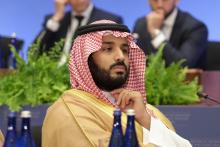
Saudi Crown Prince visit critical to global energy policy development, USEA chief says

Job Title: 
Lead Strategist, State Government Policy
Organization: 
PJM

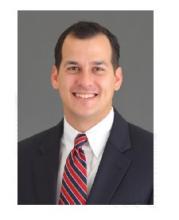
Timothy C. Burdis is a lead strategist within the State Government Policy Department at PJM Interconnection. He assists in outreach and strategy development for state government engagement; focusing on policy assessment, market design and transmission planning. He is responsible for PJM’s engagement with the Organization of PJM States, Inc. (OPSI).

Before his current post, Mr. Burdis worked on PJM emerging markets; responsible for the planning and integration management of changes to the wholesale electricity market. He specialized in changes brought about by state policy, renewable energy and infrastructure investment. He was also responsible for conducting industry research and analysis impacting electricity markets, and facilitating PJM’s corporate strategic planning process.

Additionally, Mr. Burdis served as director of business development & external affairs for PJM Environmental Information Services, Inc.

Mr. Burdis holds a Master of Science degree in Software Engineering from West Virginia University.

Job Title: 
Nonresident Senior Fellow, Global Energy Center
Organization: 
Atlantic Council

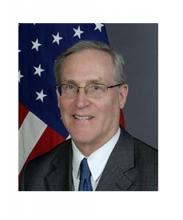
Dr. Robert F. Ichord, Jr. is a nonresident senior fellow at the Atlantic Council’s Global Energy Center. He comes to the Atlantic Council after almost forty years of US Government service in advancing US international energy interests. He retired in January 2016 from the US Department of State, where he served as deputy assistant secretary for energy transformation in the Energy Resources Bureau from 2011 to 2015. He recently established Ichord Ventures LLC, which provides energy analysis and consulting services to both the private and public sectors. 

At the US State Department, he helped launch the new Energy Resources Bureau established by Secretary Clinton and worked to further US foreign policy interests in energy security, sustainable development, and global climate change. He shaped US policies and programs in clean energy with a special focus on electricity sector transition, improving energy efficiency, commercializing renewable energy technologies, and increasing energy access in emerging nations. 

Prior to working for the US State Department, Ichord worked for the US Agency for International Development (USAID) in the Europe and Eurasia Bureau as Chief of Energy and Infrastructure.  He managed and supported over $500 million in energy and infrastructure projects in Eastern Europe and the former Soviet Union, and led US efforts to further energy transition and promote private investment in the region. He initiated the first US energy assistance programs in Eastern Europe in 1990-91 and in the New Independent States in early 1992. He created innovative, cost-sharing private public partnerships linking US utilities, regulators, and industrial companies with counterparts in Europe. He played a leading role in interagency efforts to close and improve the safety of high- risk, Soviet nuclear reactors, helping to craft and negotiate the G-7 agreement and follow-on programs to close the remaining Chernobyl reactors and those in Bulgaria and Lithuania.  From 1979-1989, he was chief of energy and natural resources in the Asia, Near East, and Europe Bureau, playing a key role in developing $1 billion of new energy assistance projects in power generation and distribution, energy efficiency, and rural energy systems, and helped pioneer the concept of private power in Asia. 

March 28th, 2018

Webcasting is available for this event!

Hear leading experts on grid reliability speak about the challenges encountered in Europe and how the U.S. plans to deal with those challenges in its quest to integrate increasing amounts of clean--but intermittent--renewable generation into the grid.

Pages