
Job Title: 
Program Director
Organization: 
United States Energy Association

Steve Herrin is the Director of Cyber Security Programming in support of the Energy and Technology Governance Program (ETAG) and the Utility Cyber Security Initiative (UCSI), joining USEA in November 2020. Steve had previously been with the North American Electric Reliability’s Electricity Information Sharing Analysis Center (E-ISAC) since August 2015 serving as the Director of Operations and Strategic Partnerships as well as leading the Cybersecurity Risk Information Sharing Program (CRISP). His responsibilities included oversight of Watch Operations, Physical Security Analysis, and the Cyber Threat Intelligence teams.

In the prior eight years with the Department of Homeland Security's Office of Infrastructure Protection, he served as the Branch Chief of the Infrastructure Analysis Branch evaluating the potential consequences of disruption from physical or cyber threats and incidents. After graduating from Georgia State University with a Bachelors in Business Administration in Risk Management and Insurance, he joined the insurance brokerage firm McGriff, Seibels and Williams, Inc. as a Marketing Account Executive managing portfolios for many large electric utility clients. Steve received his Executive MBA from Georgetown University in 2015 and served in the US Navy Submarine Service for over twelve years.


Job Title: 
Senior Advisor, Office of the Secretary
Organization: 
U.S Department of Energy
Shalanda H. Baker was mostly recently a professor of law, public policy, and urban affairs at Northeastern University. She was the co-founder and co-director of the Initiative for Energy Justice, which provides technical law and policy support to communities on the front lines of climate change. Baker served as an Air Force officer prior to her honorable discharge pursuant to the then existing “Don't Ask, Don't Tell” policy, and became a vocal advocate for repeal of the policy. She earned a B.S. in Political Science from the U.S. Air Force Academy, a J.D. from Northeastern University, and L.L.M. from the University of Wisconsin.
Profile Type: 
Speaker
Credentials: 
JD
Job Title: 
Senior Advisor to the Secretary of Energy
Organization: 
U.S. Department of Energy
Kate Gordon has spent the past two decades working at the intersection of climate change, energy policy, and economic development. Most recently, Gordon served under California Governor Gavin Newsom as the Director of the Governor’s Office of Planning and Research and Senior Policy Advisor to the Governor on Climate. Trained as a community organizer, and later in law and regional economic development, her focus has long been on bringing diverse groups together to work toward a more sustainable, inclusive economy. Prior to being appointed OPR Director, Gordon was the founding director of the Risky Business Project, which focused on quantifying the economic impacts of climate change on key U.S. regions and sectors. Gordon has served in senior leadership positions at several nonpartisan think tanks including the Henry M. Paulson Institute, the Center for the Next Generation, the Center for American Progress, and the Center on Global Energy Policy at Columbia University. Gordon got her start on energy and climate issues working at the national Apollo Alliance, where she ultimately served as co-Executive Director until the merger with the Blue-Green Alliance in 2011. Under her leadership, the Apollo Alliance drafted key parts of the American Recovery And Reinvestment Act of 2009 (ARRA) including the Advanced Manufacturing Tax Credit, and also partnered with the AFL-CIO to draft "just transition" proposals for several key energy and climate bills. Gordon earned a J.D. and a Masters in City and Regional Planning from the University of California-Berkeley, and an undergraduate degree from Wesleyan University.
Profile Type: 
Speaker
Job Title: 
Deputy Director for Energy
Organization: 
Executive Office of the President - OSTP

An internationally-recognized energy expert, Dr. Benson serves as Deputy Director for Energy & Chief Strategist for the Energy Transition at OSTP. Trained as an earth scientist and engineer, she is an expert on wide variety of topics related to energy and the environment. For the past 25 years, she has focused on deep decarbonization of the global energy system. She comes to OSTP from Stanford University where she is the Precourt Family Professor of Energy Resources Engineering, in the School of Earth, Energy and Environmental Sciences. During her time at Stanford, she was also the Director of the Global Climate and Energy Project, a research program focused on discovering and developing new technologies for reducing carbon dioxide emissions from the energy system. Prior to joining Stanford University, she was at Lawrence Berkeley National Laboratory, where she held many positions, including Earth Sciences Division Director, Associate Laboratory Director for Energy Sciences, and Deputy Director for Operations. She has been a coordinating lead author for the Intergovernmental Panel on Climate Change (IPCC), and a member of several National Academies of Sciences studies related to energy and the environment, most recently the study on Negative Emissions Technologies and Reliable Sequestration.

Profile Type: 
Speaker
Credentials: 
Ph.D.
Job Title: 
Director - Loan Programs Office
Organization: 
U.S. Department of Energy
Jigar Shah was most recently co-founder and President at Generate Capital, where he focused on helping entrepreneurs accelerate decarbonization solutions through the use of low-cost infrastructure-as-a service financing. Prior to Generate Capital, Shah founded SunEdison, a company that pioneered “pay as you save” solar financing. After SunEdison, Shah served as the founding CEO of the Carbon War Room, a global non-profit founded by Sir Richard Branson and Virgin Unite to help entrepreneurs address climate change. Originally from Illinois, Shah holds a B.S. from the University of Illinois-UC and an MBA from the University of Maryland College Park.
Profile Type: 
Speaker
Job Title: 
Acting Director for Clean Energy Demonstrations
Organization: 
U.S. DOE - Office of Clean Energy Demonstrations

Ms. Kelly Cummins is the Acting Director and Principal Deputy Director for the Office of Clean Energy Demonstrations (OCED) at the U.S. Department of Energy (DOE). In this role, she is responsible for delivering more than $20 billion provided by the Bipartisan Infrastructure Law to support large-scale clean energy demonstration projects.

Ms. Cummins has worked in the field of national and energy security at DOE for more than 20 years. Prior to her role in OCED, Ms. Cummins served as the Associate Deputy Director for Field Operations in the Office of Science, where she was responsible for management and operational oversight of the Office of Science field complex, including 10 national laboratories executing leading scientific research and development. Prior to that, Ms. Cummins served as the Deputy Assistant Deputy Administrator and Program Executive Officer for Production Modernization in the National Nuclear Security Administration's (NNSA) Office of Defense Programs. In this role, she was responsible for U.S. efforts to modernize and sustain the nuclear weapons production enterprise. From 2013 to 2017, Ms. Cummins was a Senior Advisor to former Secretary of Energy Ernest Moniz, focusing on project management and national security issues as well as enterprise risk management.

Ms. Cummins also previously headed efforts to dispose of surplus U.S. highly enriched uranium and weapon-grade plutonium as the NNSA Associate Assistant Deputy Administrator for Fissile Materials Disposition. In addition, as the Director of Former Soviet Union and Asian Threat Reduction in the Global Threat Reduction Initiative, she led efforts to remove highly enriched uranium and plutonium from vulnerable locations around the world.

Prior to joining the Department, Ms. Cummins worked in the U.S. Senate for the Assistant Majority Leader and in the private sector for a consulting company supporting the Department of Defense.

Ms. Cummins has a Master of Science degree from the Georgia Institute of Technology. She currently resides with her husband and two sons in Washington, DC.

Profile Type: 
Speaker
Credentials: 
M.S.
April 14th, 2021

As the US continues on its path of decarbonization and goal of a low to zero carbon economy, one huge opportunity in this transition is the use of CCUS.

Job Title: 
Vice President & Chief Technology Officer
Organization: 
General Electric Renewable Energy

Danielle Merfeld is the Chief Technology Officer of GE Renewable Energy, reporting to the CEO. In this role, she leads technical efforts to develop differentiated products and services across the broadest renewable energy portfolio in the industry, including onshore wind, offshore wind, grid solutions, solar PV, batteries, and hydro. She also champions sustainability efforts across the business, leading a team focused on achieving carbon neutrality, and leads the GE Renewable Energy Edison Engineering Program. Additionally, Danielle serves as co-leader of the GE Women’s Network, a global organization focused on the recruiting, retention, development and promotion of talented women across GE. She was elected to the National Academy of Engineering in 2021.  Danielle was recognized by the New York Capital Region Chamber of Commerce with the “Women of Excellence Award” in 2016, was named “Woman of the Year” by the Cleanie Awards in 2018 and recognized in the top 5 on the 2020 North American Power List.

Prior to her role at GE Renewable Energy, Danielle was the Vice President & General Manager at GE Global Research where she advanced disruptive technology platforms across the industrial sector. As a thought leader in the industry, Danielle has delivered remarks and participated on panels at conferences and symposiums on topics like digital platforms, advanced controls, the energy transformation, the future of renewable energy, grid challenges and solutions, and microsystems.

Danielle received her B.S. degree in Electrical Engineering from the University of Notre Dame, and Ph.D. in Electrical Engineering from Northwestern University. She has authored or co-authored over 70 papers in refereed technical journals and has given presentations at conferences and symposiums around the world.  Danielle is a member of several technical associations and on the Board of Trustees at the University of Notre Dame.  She serves on the boards of Texas A&M University’s Smart Grid Center, focused on modernizing the electrical grid; and Advanced Energy Economy, an organization of businesses working to make energy secure, clean, and affordable.  Danielle is also an Ambassador to the Clean Energy, Education and Empowerment (C3E) initiative representing the United States.

April 27th, 2021

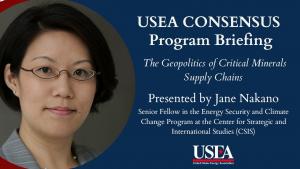
As clean energy technology becomes the latest frontier for geoeconomic rivalry, the security of supply chains for rare earths and critical minerals—essential materials for clean energy—has become a global strategic issue. The fragility of global supply chains revealed by COVID-19 and rising competition from China have only heightened the importance of supply chain security for critical minerals.

Job Title: 
Senior Fellow in Energy Security & Climate Change Program
Organization: 
Center for Strategic and International Studies (CSIS)

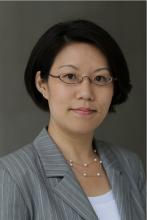
Jane Nakano is a senior fellow in the Energy Security and Climate Change Program at the Center for Strategic and International Studies (CSIS). Her research interests include U.S. energy policy; global market and policy developments concerning natural gas, nuclear energy, and critical minerals; and energy security and climate issues in the Asia-Pacific region. She frequently writes and speaks on these issues at domestic and international conferences and to media around the world. She has also testified before Congress on U.S. liquefied natural gas (LNG) exports and before the U.S.-China Economic and Security Review Commission on U.S.-China nuclear energy cooperation. Prior to joining CSIS in 2010, Nakano worked in the Office of Policy and International Affairs in the U.S. Department of Energy, where she covered a host of energy, economic, and political issues in Asia. From 2001 to 2002, she served at the U.S. embassy in Tokyo as special assistant to the energy attaché. Nakano graduated from Georgetown University’s School of Foreign Service and holds a master’s degree from Columbia University’s School of International and Public Affairs.

Pages