My research examines how the tools and practices of ecological research, geology, and venture finance transform inter-generational relationships in rural areas. My first book manuscript, Science, Survivance, and the War in the Woods (under contract with Duke University Press), explores the afterlives of several world-renowned research initiatives that were established in western Canada at the end of the twentieth century following a period of widespread anti-logging blockades known as the “War in the Woods.” When first established, these land-use planning forums, long-term forestry experiments, and Indigenous counter-mapping programs each brought international attention to this remote region and established its researchers as leading voices in an international wave of science-based governance. In recent years, however, most of these projects have collapsed. Each chapter in the book focuses on a facet of rural researchers’ social and professional “survival” that has been unsettled by government downsizing: forestry scientists retiring without successors to carry on decades-long studies; capacity-building initiatives designed to train and disperse Indigenous technicians, collapsing for want of funds; tense negotiations over the roles that corporate-funded data collection projects might play in the futures of collaborative activism. Treating these transitions as intimate processes of social reproduction, the monograph shows how new concepts of inheritance, nostalgia, resilience, and extinction come into use among White and Indigenous researchers who increasingly see the future health of the region’s forests as interwoven with the continuance of their careers. By focusing on researchers’ social attachments rather than on the rise and fall of specific institutions or projects, the monograph challenges prevailing anthropological approaches to expertise by asking how the lives of individual researchers come to matter within rural histories of conservation and Indigenous-settler colonial conflict.
Since 2018, I have also undertaken ethnographic work in the American Mountain West, where large-scale rare earth minerals mines have been perpetually promised and deferred. This second project asks: How does the circulation of geotechnical information shape how rural residents come to understand the “failure” of speculative mineral exploration projects and their potential for future renewal? How have Indigenous and settler institutions positioned themselves within these conversations, and how have they alternately contested and adopted exploration companies’ narratives while articulating their own political and economic visions? By examining how the financialization of mineral exploration work highlights the agency and mobility of individuals, I seek to understand how exploration experts encourage rural residents to imagine the futures of the communities – and of their lives as rural residents – in new terms. Building on ethnographic fieldwork among exploration geologists, financiers, citizen advocacy groups, and materials scientists designing new technologies for utilizing rare-earths based materials and for extracting them from industrial waste, the project examines how the circulation of geotechnical and financial knowledge in rural areas shape residents’ encounters with prospective projects that may never be fully realized. Across field sites in Wyoming, Colorado, and Idaho, I seek to understand how venture finance-backed development strategies premised on individual mobility and technological innovation are shaping rural residents’ senses of their place within global orders. This project is supported by the National Science Foundation programs in Science and Technology Studies and Cultural Anthropology.
As an outgrowth of both of my primary research projects, I am currently completing a second monograph based on research among geologists, forestry scientists, and other environmental simulation specialists whose lives and experimental practices were refashioned by an insect infestation that killed more than half of British Columbia’s pine trees. The manuscript asks how scientists’ increasing reliance on computer modeling tools for making sense of ecological crisis, dislocation, and individual precarity has provoked new questions about the meanings of “home” in rural settler communities. How do rural researchers secure their epistemic authority and senses of self as they lose access to archives, human colleagues, and physical spaces of experimentation? The manuscript examines connections between influence, obsolescence, and technological change by exploring how geological and ecological modelers re-imagine their roles as experts, mentors, collaborators, and friends as their research worlds continue to virtualize.
While most of my research has focused on North America, I am also beginning to engage with ethnographic locations, academic audiences, and theoretical literatures in Southeast Asia. In 2021, as a visiting senior research fellow at the Asia Research Institute and the Department of Malay Studies at the National University of Singapore, I began expanding my work on mineral exploration expertise by conducting preliminary research for a new ethnographic project on rare earth elements processing in Malaysia. Through interviews with government officials, university researchers, and corporate liaisons, I am beginning to study recent efforts by Australian and Japanese firms to establish new research infrastructures in Malaysia as a means of securing public support for a controversial processing center near the city of Kuantan. The project asks: how are geopolitical conversations about Malaysia’s “strategic” location within mineral supply chains emerging within the lives of Malaysian engineering students, activists, and resource workers? How are individually-focused technical training and outreach initiatives connected with the site being used to present technological expertise as a public good? How have these investments been positioned by different actors as a moral response to the harm and other health disparities experienced by communities surrounding other historic mineral processing centers in Malaysia, and what new critiques have activists developed in response?
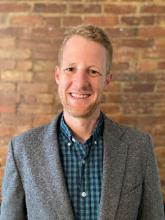
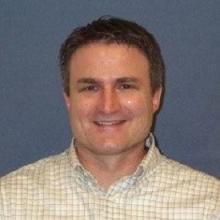
Before moving to Baltimore in 2017, I grew up in Wyoming and studied in Berkeley, California, where I completed a master’s degree in materials science and engineering, as well as Cambridge, Massachusetts, where I completed my Ph.D in the History, Anthropology, and Science, Technology, and Society program at the Massachusetts Institute of Technology. I also served as a postdoctoral fellow in the Canada Program at Harvard University’s Weatherhead Center for International Affairs.