Job Title: 
Carbon Transport Program Manager
Organization: 
USDOE - Office of Fossil Energy & Carbon Management

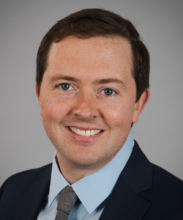
Sarah Leung is the Carbon Transport Program Manager with U.S. Department of Energy’s Office of Fossil Energy and Carbon Management.

She graduated from the University of Illinois at Urbana-Champaign with a Bachelor of Science in Chemical Engineering and minor in Technology & Management. Sarah is a well engineer with industry and international experience developing exploration and production assets. She is focused on utilizing her project delivery and well engineering knowledge to advance carbon transportation and sequestration deployment.

Profile Type: 
Speaker
Job Title: 
Assistant Research Scientist & Project Engineer
Organization: 
Illinois Sustainable Technology Center
Profile Type: 
Speaker
Job Title: 
Carbon Sequestration Program Manager
Organization: 
City of Minneapolis - Health

Jim is a licensed Professional Geologist with 36 years of experience in the environmental field. In addition to his undergraduate degree in Geology, Jim has a Master of Business Administration and a Master of Science in Environmental Policy and Management. He has over 20 years of environmental consulting experience and has been at the Minneapolis Health Department for the past 12 years. Jim spent a year in Afghanistan with the Army National Guard as a Hydrologist on an Agri-Business Development Team. It was during this time that he first looked at biochar to improve soil health. Jim is currently the Carbon Sequestration Program Manager with the City of Minneapolis.

Profile Type: 
Speaker
Job Title: 
Director - Center for Sustainable Building Research
Organization: 
University of Minnesota
Richard is the Director of the Center for Sustainable Building Research and an associate professor in the College of Design at the University of Minnesota. From 2012 to 2014, he was the Executive Director of the International Living Future Institute, leading the operations and strategic efforts around all of the Institute's signature programs. His research focuses on regenerative design as a fundamentally new approach that must be required of architecture across scales (from the building to the neighborhood to the city) to achieve sustainable and resilient urban development in a dynamic world.
Profile Type: 
Speaker
Job Title: 
Principle Engineer Renewable Energy Intergration
Organization: 
California Independent System Operator (CAISO)

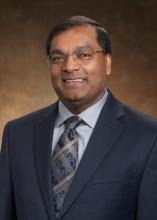
Clyde Loutan is presently a Principal Engineer at the California Independent System Operator Corporation (ISO) focusing on power system control performance, and was the Principal Investigator for several technical studies including the ISO’s renewable resource integration reports published over the years. He develop the ISO’s original “Duck Curve” to demonstrate how the increasing amount variable resources will change how the balancing of the grid is managed. He was also instrumental in working with NERC to identify ramping capability or flexibility as an essential reliability service needed to integrate higher levels of renewable resources. Mr. Loutan has been instrumental in developing several operating policies and was the lead engineer in charge of investigating the root cause of the California blackouts in 2000/2001.

Mr. Loutan holds B.S. and M.S. degrees in Electrical Engineering from Howard University in Washington D.C., and is a senior member of the IEEE.

Job Title: 
Laboratory Director
Organization: 
Idaho National Laboratory

Dr. John C. Wagner is the director of Idaho National Laboratory and president of Battelle Energy Alliance, LLC. He is responsible for management and integration of a large, multipurpose laboratory whose mission focuses on nuclear energy, national and homeland security, and energy and environment science and technology. He manages this U.S. Department of Energy (DOE) national laboratory of approximately 5,400 scientists, engineers and support staff in multiple nuclear and nonnuclear experimental facilities, with an annual budget of nearly $1.6 billion. Wagner began serving as INL director on Dec. 11, 2020. He has more than 20 years of experience performing research, and managing and leading research and development projects, programs and organizations. Wagner’s experience is strongly aligned with INL’s programmatic portfolio. He has guided and helped implement INL’s nuclear energy strategy during
an innovative and exciting time at the nation’s center for nuclear energy research and development. As a recognized expert in reactor and fuel cycle technologies, he is called upon frequently to provide expert testimony to Congress and to advise in formulation of policies for nuclear fuel cycles and advanced reactors.

He has been at INL since 2016 and served as associate laboratory directorfor Nuclear Science and Technology (NS&T) since 2017. His previous roles included director of Domestic Programs in NS&T and director of the Technical Integration Office for the DOE-NE Light Water Reactor Sustainability Program at INL. Wagner initially joined INL as the chief scientist at the Materials and Fuels Complex in 2016. Prior to joining INL, he worked for nearly 17 years at Oak Ridge National Laboratory, where he held several research and leadership roles in reactor and fuel cycle technologies. 

Credentials: 
Ph.D.
Job Title: 
President
Organization: 
SHASTA Advisors, LLC.
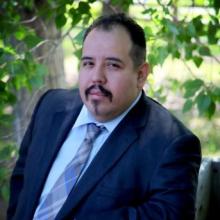
Daniel C. Cardenas Jr., is a member of the Hammawi Band of the Pit River Tribe of California. He makes his home at Saint Stephens, WY, Alturas, CA, and Miami, FL with his six children. Daniel graduated high school at River City High School, West Sacramento, CA, attended the University of California, Berkeley, Berkeley, CA.
Daniel served as an elected member of the Pit River Tribal Council, a Federally Recognized Tribe, representing the Hammawi Band, for over 15 years, from 1992-2016. He has owned and operated Hammawi Communications, a public relations firm, Shasta Advisors, a business consulting firm, and Sweetgrass Government Relations, a government relations/lobbying/advocacy firm, since 1999.
Daniel served as a Principal with Yavapai Regional Capital for several years, where he developed Public Private Partnerships (PPP’s) in the Western United States. These projects included two rail projects, a bridge project, and a toll-road project. He is also the owner of Seven Generations Infrastructure, a tribal renewable energy infrastructure development firm.
Daniel has served on various non-profit boards, including, the Wyoming Food Bank of the Rockies, the Wind River Tourism Council, and he co-founded the Wind River Community Foundation, and Knowledge River, an indigenous Energy STEM Initiative.
Daniel also serves on the Advisory Committee of the “Climate Equity and the Clean Energy Transition” Project sponsored by the Clean Air Task Force.
Daniel currently serves as the CEO, President, and Chairman of the Board of the American Indian Infrastructure Association and the National Tribal Energy Association, both trade associations representing the interests of Native American Tribes across the United States.
Job Title: 
Chief Executive Officer
Organization: 
Pacific NorthWest Economic Region

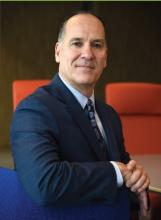
Matt Morrison serves as CEO of the Pacific NorthWest Economic Region (PNWER) which was established in 1991 by statute in the states of Alaska, Washington, Idaho, Montana, and Oregon, and the western Canadian provinces of British Columbia, Alberta, Saskatchewan, the Yukon and Northwest Territory. Mr. Morrison also manages PNWER’s Center for Regional Disaster Resilience (CRDR).

As CEO of PNWER, Mr. Morrison’s responsibilities include coordinating all PNWER projects and reporting to the governing board, which consists of legislative leadership of each state, province, and territory, governors and premiers, and private sector leaders. The mandate of PNWER is to build the region's economy while enhancing the region’s natural environment. PNWER’s 15 working groups focus on trade and border issues, economic development, agriculture, energy and environment, invasive species, tourism, transportation, and workforce, among several others.

Mr. Morrison is a leader in promoting innovation in the Canada-U.S. border region and has been instrumental in several successful pilots of the Beyond the Border and Perimeter Security Action Plan. PNWER has encouraged both Ottawa and Washington, D.C. to consider the region a ‘cross-border pilot zone’ because of the network of trusted relationships built by the ongoing working groups that PNWER facilitates.

Mr. Morrison has been engaged in building economic resilience over the past decade by hosting a series of critical infrastructure interdependency exercises focused on the regional economy and, through the Center for Regional Disaster Resilience, addressing public and private gaps and vulnerabilities to mitigate risks from all hazards to the regional economy. The CRDR also runs the Northwest Warning, Alert, and Response Network (NWWARN) and has conducted annual cybersecurity exercises in Washington State and Idaho for the past several years, focusing on cyber resilience and training. In addition, Mr. Morrison has been instrumental in coordinating with the Canadian government on infrastructure and port security and preparedness issues related to the Pacific Northwest, including joint exercises leading up to the 2010 Winter Olympics.

Along with his role at PNWER, Mr. Morrison is Co-Chair of the Future Borders Coalition (www.futureborderscoalition.org), a group of public and private organizations bringing solutions to border issues in all modes at the Canada – U.S. border. The FBC is currently working on COVID resilience and solutions to safely easing border restrictions based on science and health standards.

Mr. Morrison lives in Seattle with his wife, Beth. He and Beth have four adult children with whom they enjoy skiing, sailing, and hiking.

Job Title: 
Chief of Data, Risk, and Analytics
Organization: 
USDOT - PHMSA
Profile Type: 
Speaker

Pages